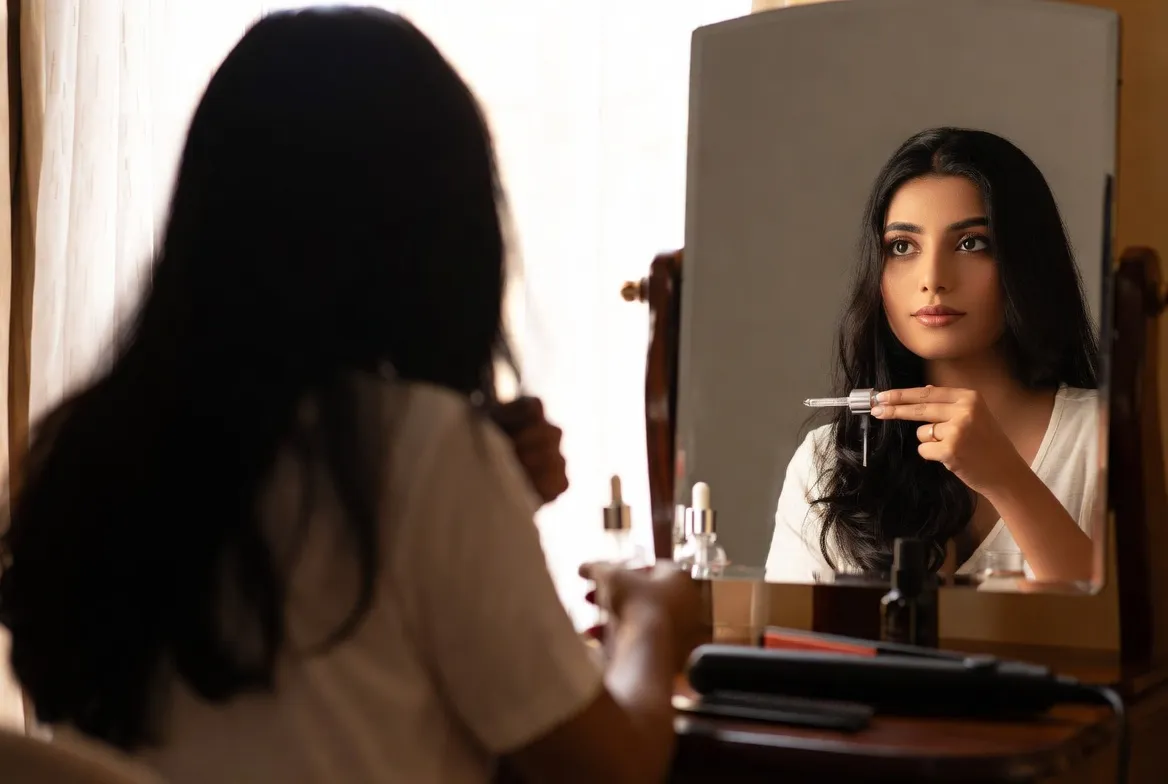

Revitalize Your Roots: Advanced Scalp Massage Techniques for Sustainable Hair Growth


The Root of the Problem
The Science: Why Massage Promotes Growth
Vasodilation: Massage increases blood flow to the subcutaneous tissues. Your blood carries oxygen, nutrients, and essential minerals. By increasing delivery to the hair bulb, you are essentially "feeding" the hair factory, prolonging the anagen (growth) phase of the hair cycle. Mechanical Stress on Follicles: A landmark study in Japan showed that standardized scalp massage resulted in increased hair thickness after 24 weeks. The mechanical stretching of the cells in the hair follicle (dermal papilla cells) sends signals to change gene expression, encouraging proteins related to hair growth to become more active.
Essential Techniques for Maximum Efficacy
1. The Effleurage (Warm-Up)
How to do it: Use the flat pads of your fingers (never the nails). Start at the front hairline and stroke backward towards the crown and nape of the neck using gentle, gliding pressure. Benefit: This warms up the tissue and spreads natural sebum oils along the hair shaft.
2. The Petrissage (Deep Kneading)
How to do it: Place your hands firmly on the sides of your head (above the ears). Apply pressure and move the scalp itself against the skull in circular motions. Your fingers should not slide over the hair; the skin should move. Technique: Work your way from the sides to the crown, then to the back. Imagine you are trying to squeeze a sponge. Duration: Spend at least 3-4 minutes here.
3. The "Spider Hand" Vibration
How to do it: Curve your hands like a spider or a claw. Place fingertips on the scalp and rapidly vibrate your hand without moving the position of the fingers. Benefit: This vigorous motion is great for stimulating the lymphatic system, helping to drain toxins away from the follicle.
4. The Inversion Method (For Rapid Growth)
The Concept: By hanging your head upside down, you use gravity to rush blood to the scalp. Procedure: Sit on a chair and lower your head between your knees, or hang off the side of a bed. Massage your scalp for 4 minutes in this position. Frequency: Do this for 7 consecutive days each month. Do not overdo it, as the body can adapt to the increased blood flow. Warning: Avoid this if you have high blood pressure, glaucoma, or spinal issues.
To Oil or Not to Oil?
Rosemary Oil: The 2025 favorite. Studies have compared rosemary oil favorably to Minoxidil (a hair regrowth drug) for boosting circulation without the side effects. Always dilute it in a carrier oil. Pumpkin Seed Oil: Known to block DHT (the hormone responsible for androgenetic alopecia). Jojoba Oil: Closest to human sebum; perfect for those with oily scalps who fear clogging pores.
Tools of the Trade: Are They Worth It?
Common Mistakes to Avoid
Tangling the Hair: If you have long hair, do not rub vigorously in circles that cause knots. Instead, press, move the skin, lift fingers, and replace them. Ignoring the Occipitalis: Many people focus only on the top of the head. Don't forget the back of the head (occipitalis muscle) and the neck. Tension here restricts blood flow to the top. Over-Oiling: Drenching your hair in oil can attract dirt and require harsh shampooing to remove, which strips moisture. A teaspoon is often enough for the scalp.
A Realistic Timeline: When Will I See Results?
Weeks 1-4: You will notice less tension headaches and better sleep quality. Weeks 4-8: You may notice a reduction in hair shedding during showers. Months 3-6: This is the sweet spot where you should start seeing "baby hairs" along the hairline and an improvement in overall density.
Conclusion

Leave a Reply
Your email address will not be published. Required fields are marked *
Search
Category

.webp)
 (1080 x 1080 px).webp)
.webp)
.webp)
.webp)
.webp)